Thinking, “are dental implants necessary?” This short guide answers that question up front and helps you weigh options after tooth loss, ongoing jaw pain, or poorly fitting dentures. You’ll learn when implants are medically needed versus elective, who makes a good candidate, what treatment looks like, costs and risks, and practical next steps. If you live in or near Austin, TX and wonder are dental implants necessary in Austin, TX, this guide is for you.
Are Dental Implants Necessary? A Simple Answer
Short answer: sometimes. Dental implants are medically necessary when they restore critical function, prevent further oral damage, or are the only viable long-term option. Often they are elective when the goal is improved appearance or comfort. Common goals implants address include chewing, speech, stopping bone loss, and protecting long-term dental health.
When Implants Are Medically Recommended
Replacing missing teeth to restore function
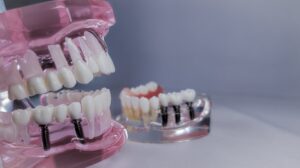
Implants replace single or multiple teeth and can support a full arch. They restore normal chewing and stop nearby teeth from shifting. In cases where missing teeth make eating or speaking difficult, implants are often the recommended solution.
Preventing bone loss and facial collapse
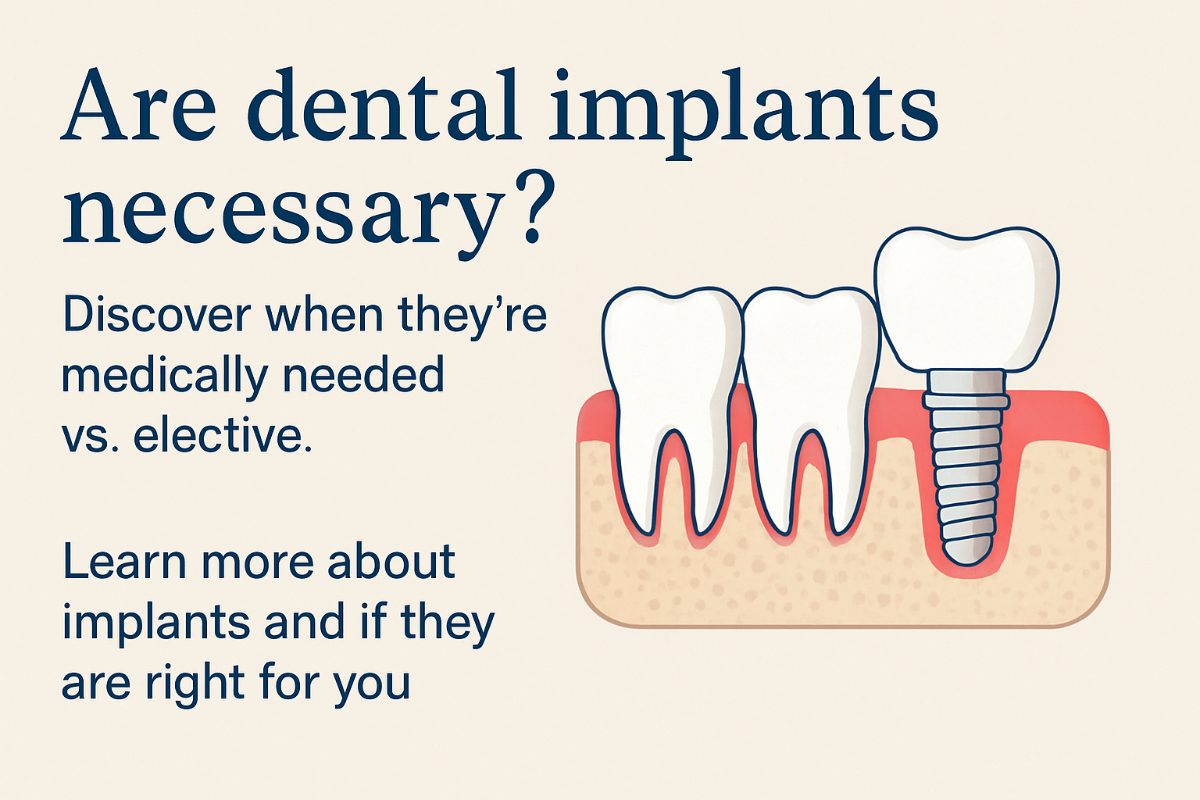
Titanium implants act like natural tooth roots and stimulate the jawbone. This prevents the bone shrinkage that follows tooth loss. Stopping bone loss matters for long-term facial support, future treatment options, and overall oral health.
When other treatments fail or aren’t possible
If bridges keep failing, root fractures recur, or dentures cause repeated sores and poor function, implants may be the best or only durable option. They offer stability where removable options cannot.
When Implants Are Optional or Cosmetic
Many people choose implants for a more natural look, better confidence, and improved comfort. But removable dentures or fixed bridges can be acceptable alternatives when cost or medical limits rule out implants. Cosmetic goals alone do not make implants medically necessary.
Alternatives: bridges, partials, and dentures
- Bridges: Less invasive up front and lower cost, but require altering adjacent teeth and don’t stop bone loss under the missing tooth.
- Partials: Removable, affordable, and quick, but they can move, trap food, and stress remaining teeth.
- Dentures: Full dentures restore appearance and function reasonably well, but often feel less stable and can accelerate bone loss over time.
Who Is a Good Candidate?
Bone volume and quality
Good bone helps implants integrate. If bone is low, options include bone grafting or advanced implants like zygomatic or pterygoid implants. These allow many people to become candidates who otherwise could not.
Health factors and lifestyle
Chronic conditions (like uncontrolled diabetes), smoking, and certain medications can slow healing. That doesn’t always rule you out, but your medical history affects timing and success rates.
Oral hygiene and commitment
Implants last when patients commit to daily oral care and regular dental visits. Good hygiene and checkups are essential for long-term success.
What the Treatment Looks Like
Treatment starts with a consultation and 3D imaging (CBCT) to plan exact implant positions. Guided planning and on-site surgical guides improve precision. Surgery places the implants, then a healing period allows integration. Finally, a custom prosthetic is attached.
Typical timeline and what to expect
Timelines vary. Some patients receive temporary teeth the same day; final restorations come after healing (often 3–6 months). You can usually eat soft foods soon after surgery and return to normal chewing after integration and final restoration.
Costs, Insurance & Financing
Main cost drivers are the number of implants, whether grafting or advanced techniques are needed, and the type of prosthetic (single crown vs. full-arch implant bridge). Many insurance plans cover part of the cost but not all. Practices typically offer financing plans to spread payments.
Risks, Benefits & Long-Term Outcomes
Implants have high success rates when planned and placed correctly. Risks include infection, implant failure, or nerve issues, but these are uncommon with modern imaging and guided surgery. Long-term benefits include improved chewing, speech, bone preservation, and fewer future dental problems.
Why Trust Union Dental Implant Center
If you’ve been asking are dental implants necessary in Austin, TX, consider a specialty center that handles both surgery and restorations. Union Dental Implant Center in Austin, TX is led by Dr. Adam Carter, who has a decade-plus of implant experience. The center uses on-site CBCT, computer-guided surgery, and an in-house lab for faster, more precise care. Advanced options like All-on-X and zygomatic/pterygoid implants help patients with severe bone loss avoid lengthy grafting.
Questions to Ask at Your Consultation
- How many implants have you placed and in cases like mine?
- Will you use CBCT 3D imaging and guided surgery?
- Do I need bone grafting or advanced implant solutions?
- What is the estimated timeline and total cost?
- What warranty or maintenance plan do you offer?
- What sedation options are available for surgery?
Conclusion & Next Steps
In summary, are dental implants necessary depends on your medical needs and goals. They are necessary when restoring function, stopping bone loss, or when other treatments fail. If you have missing teeth, painful dentures, or declining oral health, get a personalized evaluation. Contact Union Dental Implant Center for a detailed implant consult and to learn whether implants are the right solution for you.